The impact of climate adaptation measures on well-being in Austria

About ACTWELL
The ACTWELL project investigates how climate adaptation measures in Austria affect people's quality of life.The goal is to identify adaptation strategies that mitigate the impacts of heat, flooding, and other climate risks while simultaneously improving the well-being of diverse population groups. Together with regions and cities, measures are evaluated and simulated to assess their effects across generations. Based on this, ACTWELL develops practical recommendations for policymakers and administrators to ensure that climate adaptation is resilient, equitable, and aligned with the Sustainable Development Goals (SDGs).
The project is coordinated by the Energy Institute at Johannes Kepler University Linz and carried out in collaboration with the International Institute for Applied Systems Analysis (IIASA) and the Institute for Advanced Studies (IHS). It is funded under the Austrian Climate Research Programme (ACRP) and runs from November 2025 to November 2028.
MOTIVATION
Climate change poses a growing threat to human well-being (quality of life), economic stability, and social cohesion, and is already affecting Austria today through more frequent heat waves, floods, and the rapid retreat of glaciers. These developments not only impact health, the economy, infrastructure, and key economic sectors, but also undermine social structures and the mental well-being of the population. Without effective and timely adaptation measures, these diverse dimensions of well-being risk coming under further pressure. At the same time, it remains unclear which adaptation measures are particularly effective in mitigating climate risks and safeguarding quality of life.
Against this backdrop, the project aims to further develop an integrated approach—the Adaptation Wedges Concept—that systematically links climate adaptation with the promotion of well-being.
By analyzing existing and planned measures in selected regions, the project aims to better understand their impacts on the health, economic, and social aspects of well-being. The project thus closes a key knowledge gap and creates a solid foundation for coordinated, equitable, and long-term effective climate adaptation in Austria.
PROJECT GOALS
Against this backdrop, the project aims to use the Adaptation Wedges Concept to further develop an integrated approach that systematically links climate adaptation with the promotion of well-being.
By analyzing existing and planned measures in selected regions, the project seeks to better understand their impacts on the health, economic, and social aspects of well-being.In a further step, actionable policy recommendations will be developed in collaboration with relevant stakeholders; these recommendations will be regionally anchored, scientifically sound, and practical. In this way, the project contributes to strengthening climate resilience and social well-being in Austria.
ACTWELL thus closes a key knowledge gap and creates a solid foundation for coordinated, equitable, and long-term effective climate adaptation in Austria.
ACTWELL – Shaping Climate Adaptation in a Just and Sustainable Way
Particular emphasis is placed on social justice and gender equality to ensure that disadvantaged groups also benefit from climate adaptation. ACTWELL contributes to the implementation of key Sustainable Development Goals (SDGs), particularly climate action (SDG 13), reduced inequalities (SDG 10), sustainable cities (SDG 11), good health and well-being (SDG 3), gender equality (SDG 5), and responsible consumption and production (SDG 12). The project relies on nature-based solutions such as urban greening and floodplain restoration to mitigate climate risks, strengthen biodiversity, and improve air quality. Equitable adaptation strategies focused on vulnerable groups, along with participatory processes, promote social cohesion and local ownership. Overall, ACTWELL provides clear decision-making frameworks and concrete recommendations to make climate change adaptation effective, fair, and relevant to everyday life, thereby strengthening resilience and quality of life in Austria.
Methodology
The ACTWELL project uses a broad, interdisciplinary approach to investigate how climate adaptation measures can improve people’s quality of life:• To this end, existing and planned measures in several Austrian regions and cities are systematically documented and categorized by theme, such as risks posed by heat or flooding.• Through surveys of experts and citizens, the project assesses how these measures affect health, quality of life, and social security before and after their implementation.• In addition, simple experiments are used to better understand which measures are preferred by the population and where barriers to their implementation lie.• The MIWAG simulation model helps assess the short- and long-term impacts of adaptation measures on different population groups.• Stakeholder Engagement: In workshops, the project team collaborates with regional stakeholders to develop practical solutions tailored to local needs.
Research questions of the project
How do specific climate adaptation measures (e.g., urban cooling, flood protection, sustainable tourism) influence subjective and objective indicators of well-being, such as life satisfaction, mental health, and income stability?Which climate adaptation strategies are particularly effective in promoting well-being in different regional contexts across Austria?How can the effects of climate adaptation measures on well-being be quantified, and to what extent do socioeconomic inequalities—including gender-based income disparities and unequal access to resources—shape the ability of different population groups to adapt to climate change?What behavioral factors [psychological and social determinants], such as trust, social norms, and risk perception, influence the acceptance and success of climate adaptation measures?
PROJECT CONSORTIUM
Energieinstitut an der JKU Linz

Institut für Höhere Studien (IHS)

International Institute for Applied Systems Analysis (IIASA)

ZwanzigVierzig

NEWS & EVENTS
The latest news and events from the project at a glance.
Hands-On Workshop with Stakeholders
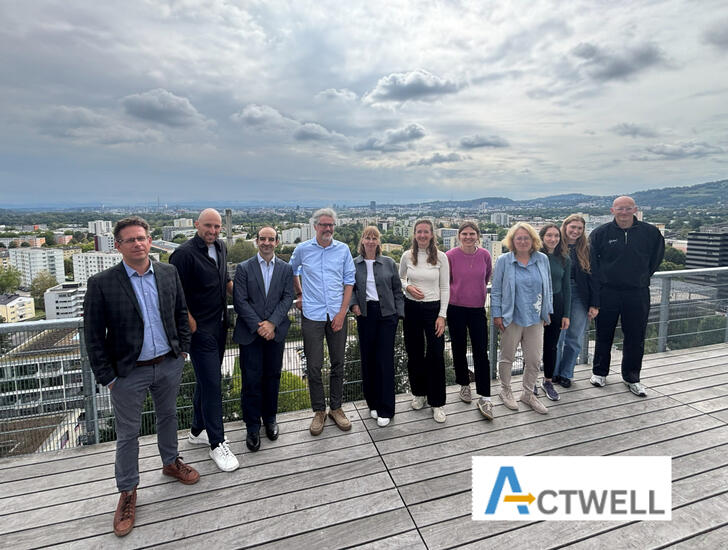
On September 10, the first practical workshop took place as part of the ACTWELL project, bringing together representatives from the KLAR! regions of Mühlviertler Alm, Mühlviertler Kernland, and Pinzgau, as well as the pioneer city of Linz.The focus was on how climate adaptation measures can influence people’s well-being while also addressing the diverse needs of cities and regions. Together, participants prioritized climate adaptation measures, discussed their potential impacts, and engaged in practical reflection on the project’s methodology and modeling in collaboration with the scientific partners IHS and IIASA.The workshop marks the start of a series of practical workshops in which scientific findings will be further developed in conjunction with the experiences and perspectives of the participating regions and cities. The goal is to develop practical recommendations for effective and region-specific climate adaptation.
KICK-OFF Linz 26.01.2026With the official kick-off meeting of the ACTWELL research project (“ACTive WELL-being through climate adaptation”), an exciting initiative on climate adaptation in Austria has been launched.Together with our project partners IHS, IIASA and Zwanzigvierzig, an interdisciplinary team is working to investigate how climate adaptation measures such as heat protection and flood protection affect the quality of life of different population groups. The aim is to develop evidence-based strategies and policy guidelines for socially just and health-promoting climate adaptation.
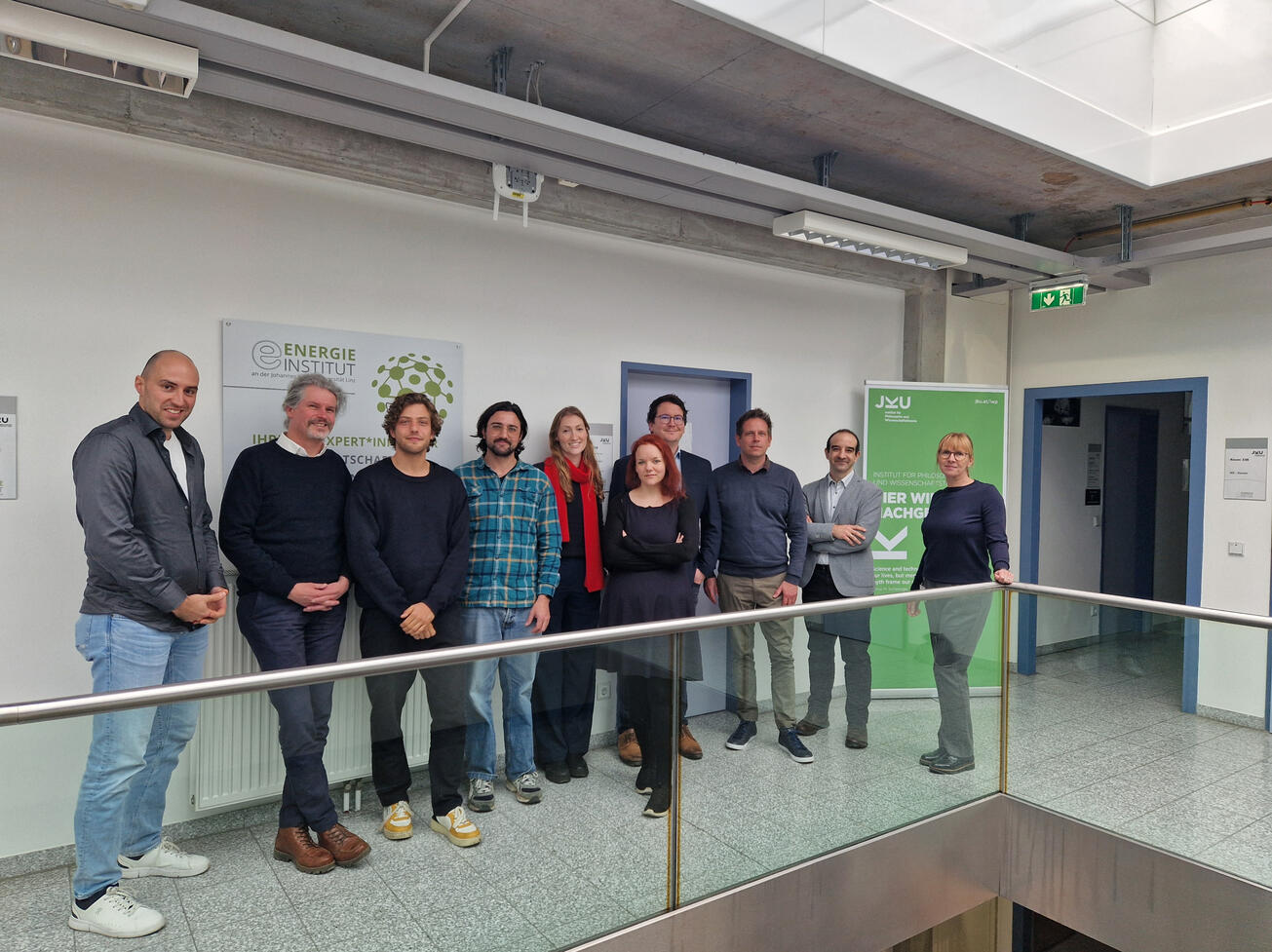
We look forward to collaborating with all partner institutions and extend our heartfelt thanks for the successful project launch!
Results & Publications
Here you will find scientific publications [results] from the project in the future.
CONTACT